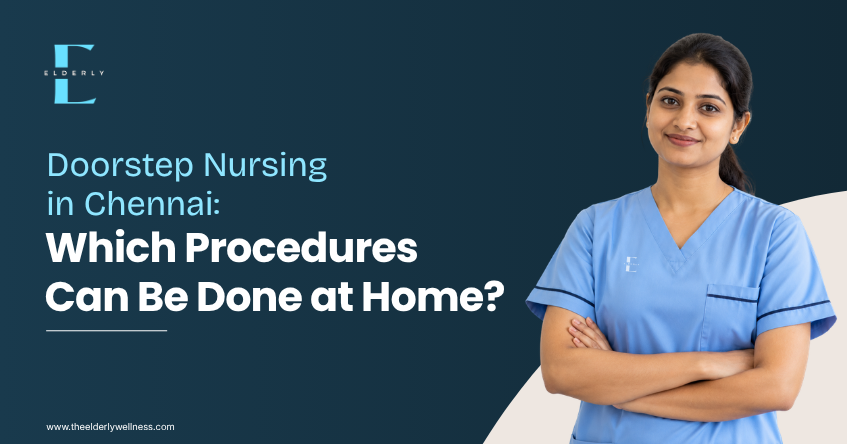
Not every medical need requires a trip to the hospital — and for elderly patients, that trip itself can be the riskiest part of getting care. Doorstep nursing has grown into one of the most requested forms of nursing services for elders in Chennai, precisely because so many routine and post-treatment procedures can now be safely handled at home by a trained professional.
This guide breaks down exactly which procedures are safe and practical at home, which ones still need a hospital setting, and how families can make that decision confidently, especially during the sensitive window of post-hospital recovery care at home.
Key Takeaways
- Doorstep nursing covers a wide range of procedures, from wound dressing to injections and vitals monitoring.
- Home nursing Chennai services reduce infection risk and travel stress for elderly and post-surgical patients.
- Some procedures — like major diagnostic imaging or emergency interventions — still require a hospital setting.
- A qualified nurse can coordinate with a family's existing doctor to keep home care aligned with the treatment plan.
- Consistent doorstep nursing visits often catch early warning signs before they become emergencies.
Need dependable home nursing Chennai families rely on?
1. What Is Doorstep Nursing Care?
Doorstep nursing care means a trained, qualified nurse visits the patient's home to carry out medical procedures, monitoring, and hygiene support that would otherwise require a clinic or hospital visit. It's designed for seniors managing chronic conditions, recovering from surgery, or simply needing consistent elderly nursing care without the strain of repeated travel.
2. Common Procedures That Can Be Done Safely at Home
Most routine and recovery-stage procedures can be handled comfortably at home by a qualified nurse, including:
- Wound dressing and suture care after minor surgeries.
- Intramuscular and subcutaneous injections, including insulin administration.
- Catheter insertion, care, and replacement.
- Vitals monitoring — blood pressure, oxygen saturation, blood sugar, and temperature.
- IV fluid administration under medical supervision.
- Ryles tube and feeding tube management.
- Blood sample collection for routine lab tests.
- Post-operative monitoring, closely tied to broader post-hospital recovery care at home plans.
3. Procedures That Still Require a Hospital or Clinic Visit
Despite how much can be done at home, some situations genuinely need hospital infrastructure:
- Diagnostic imaging such as X-rays, CT scans, or MRIs.
- Surgical procedures and major wound debridement.
- Emergency interventions requiring specialised equipment or an ICU setting.
- Complex IV chemotherapy or procedures needing sterile operation-theatre conditions.
A good home nursing provider will always be upfront about these limits rather than attempting procedures beyond safe scope.
4. How Doorstep Nursing Supports Recovery and Chronic Care
Beyond individual procedures, doorstep nursing plays a bigger role in day-to-day wellbeing. It supports activities of daily living for parents — bathing, mobility, and hygiene — while also managing medical needs like meals and medication assistance. For seniors managing incontinence or limited mobility, it also extends to personal hygiene and diaper change services carried out with dignity and privacy at home.
Families managing more complex, long-term needs often combine doorstep nursing with geriatric care services, so medical and emotional wellbeing are addressed together rather than in silos.
5. What to Look for in a Home Nursing Provider
- Verified nursing qualifications and hands-on clinical experience with elderly patients.
- Clear communication with the family's treating doctor for procedure updates.
- Transparent protocols for what happens if a complication arises mid-procedure.
- A track record supporting regular checkups for seniors, not just one-off visits.
6. A Day in the Life: What a Doorstep Nursing Visit Looks Like
A typical visit starts with a review of the patient's current condition and medication chart, followed by the scheduled procedure — whether that's a dressing change, an injection, or vitals monitoring. The nurse documents findings, flags anything unusual to the family or physiotherapy team, and coordinates the next visit. For patients also receiving physiotherapy for elders, nursing and physiotherapy visits are often scheduled to complement each other, so recovery stays on a single, coordinated track.
For seniors requiring more continuous supervision than periodic visits allow, families sometimes transition toward assisted living support, where medical and daily-living care exist under one roof.
Ready to bring safe, professional nursing procedures home?
Frequently Asked Questions
Can injections be safely given at home by a nurse?
Yes, trained nurses routinely administer intramuscular, subcutaneous, and insulin injections at home under appropriate protocols.
Is doorstep nursing available for post-surgery recovery in Chennai?
Yes, home nursing Chennai services commonly support post-operative monitoring, dressing changes, and vitals tracking after surgery.
What happens if a nurse notices a complication during a home visit?
A qualified home nursing provider will immediately alert the family and the treating doctor, and arrange hospital transfer if needed.
Can catheter care be managed entirely at home?
Yes, catheter insertion, cleaning, and replacement are among the most common doorstep nursing procedures for elderly patients.
Related Reads
- Post-Hospital Recovery Care at Home in Chennai — see how nursing support fits into a full recovery plan.
- Personal Hygiene and Diaper Change Services for Senior Citizens — dignity-focused hygiene support at home.
- How Proper Meals and Medication Assistance Improve Senior Health — daily care that works alongside nursing visits.
- Here's Why Regular Checkups Matter So Much for Seniors — staying ahead of health issues between nursing visits.