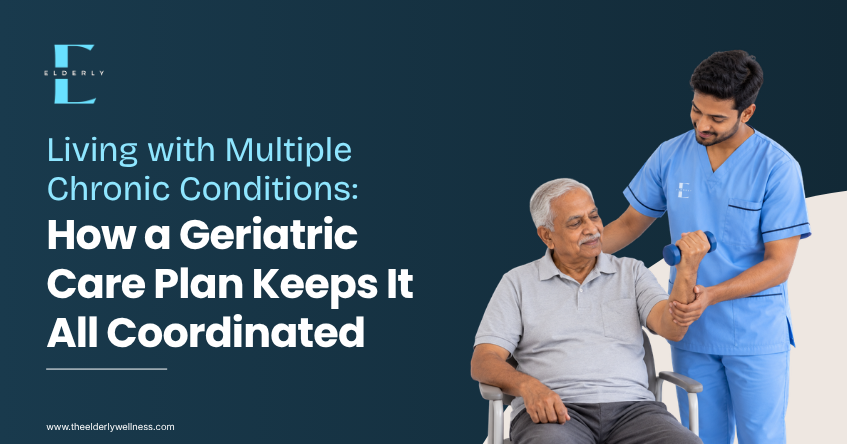
Diabetes, hypertension, arthritis, and heart disease rarely arrive one at a time. For most seniors past 70, they overlap — and each condition's treatment can quietly work against another if nobody is looking at the full picture. This is exactly the gap that structured geriatric care services are built to close, coordinating chronic condition management elderly families would otherwise have to piece together on their own.
Without coordination, families often end up managing each condition in isolation — one doctor for the heart, another for joints, a separate plan for diet — with nobody responsible for how it all fits together, similar to the fragmentation seen in age-related health conditions more broadly.
Key Takeaways
- Managing multiple chronic conditions separately often creates conflicting advice and treatment gaps.
- A geriatric care plan brings every specialist, medicine, and daily routine under one coordinated view.
- Regular monitoring catches early warning signs before conditions interact and worsen each other.
- Emotional wellbeing is just as important as physical management in long-term chronic care.
- Geriatric specialist care becomes essential once a senior is managing three or more ongoing conditions.
Looking for coordinated elderly geriatric care Chennai families can rely on?
1. Why Chronic Condition Management Gets Complicated with Age
A senior managing diabetes and arthritis, for example, may be told to exercise more for one condition while being cautious of joint strain for the other. Multiply this across three or four conditions, and families are left trying to reconcile advice that was never designed to work together. This is precisely where geriatric specialist care adds value — by looking at the senior as a whole person, not a set of separate diagnoses.
2. What a Geriatric Care Plan Actually Coordinates
A well-built geriatric care plan typically brings together:
- A single, updated list of all medications across every prescribing doctor.
- Coordinated nutrition guidance that accounts for every condition at once.
- Physical activity recommendations balanced across mobility, heart, and joint needs, often delivered through physiotherapy for elders.
- Scheduled monitoring for vitals and symptoms specific to each condition.
- Clear escalation steps if any condition shows signs of worsening.
3. Building a Single Care Plan Across Multiple Conditions
The most effective approach starts with one central record — a single document or care coordinator who understands every condition the senior manages. This avoids the common trap of lifestyle changes to prevent cardiovascular disease being recommended in isolation from arthritis or diabetes management. Pairing this with nursing services for elders ensures the plan isn't just written down but actively followed day to day.
4. The Role of Regular Monitoring and Checkups
Chronic conditions rarely stay static — blood pressure drifts, blood sugar fluctuates, and joint pain changes with the seasons. This is why regular checkups matter so much for seniors managing more than one condition; a single missed trend can quietly escalate into a hospital visit. Consistent monitoring also ensures meals and medication assistance stays aligned with how each condition is progressing.
5. Supporting Emotional Wellbeing Alongside Physical Health
Managing multiple conditions is exhausting — physically and emotionally. Seniors juggling several diagnoses often experience frustration, anxiety, or a sense of losing control over their own routine. Genuine senior emotional wellbeing support, built into the care plan rather than treated as an afterthought, helps seniors stay engaged with their own recovery instead of feeling like a passive patient.
6. When to Bring in Geriatric Specialist Care
Families should consider dedicated geriatric specialist care once a senior is managing three or more chronic conditions, is on multiple daily medications, or has had a recent hospital admission linked to one condition affecting another. At this stage, the benefits of coordinated professional geriatric care services become far clearer than trying to manage everything through separate, disconnected appointments. For seniors who also need more continuous daily supervision, assisted living support can extend this coordination into everyday living itself.
Ready to bring order to a complex care routine?
Frequently Asked Questions
What is a geriatric care plan?
It's a coordinated plan that brings together medications, nutrition, monitoring, and emotional support for a senior managing one or more chronic conditions.
How does a geriatric care plan help with multiple chronic conditions?
It ensures advice and treatment across different conditions don't conflict, and that changes in one area are checked against the others.
Is geriatric care only for seniors with serious illnesses?
No, it's valuable for any senior managing more than one ongoing condition, even if each one is currently well controlled.
Does geriatric care include emotional support?
Yes, comprehensive geriatric care plans include senior emotional wellbeing support alongside physical health management.
Related Reads
- Age-Related Health Conditions — understand the common conditions a geriatric care plan needs to coordinate.
- Necessary Lifestyle Changes to Prevent Cardiovascular Diseases — heart-healthy habits that fit into a coordinated plan.
- Here's Why Regular Checkups Matter So Much for Seniors — staying ahead of chronic condition changes.
- Benefits of Professional Geriatric Care Services — why coordinated care outperforms fragmented care.