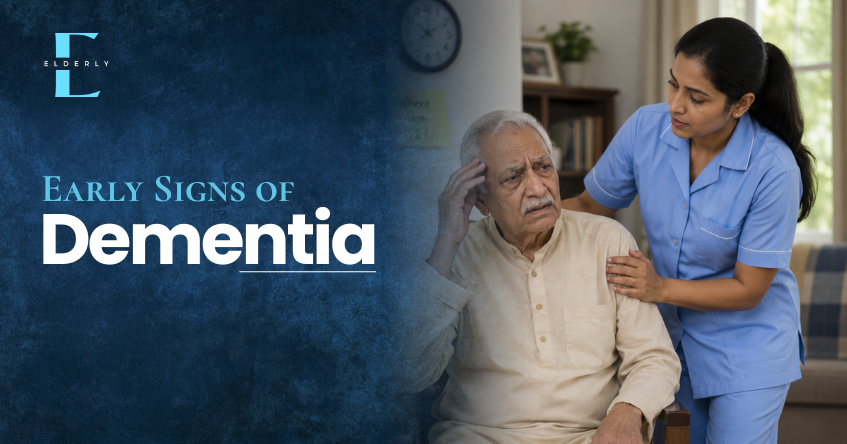
The earliest signs of dementia in elderly parents are usually subtle: repeating the same question within minutes, misplacing everyday items in odd places, struggling to follow a conversation, or getting confused about the day or date. These signs are easy to dismiss as "normal ageing," but noticing the pattern early makes a real difference to how families plan care.
In This Guide
What Are the Earliest Signs of Dementia in Elderly Parents?
- Asking the same question multiple times in one conversation
- Losing track of familiar routes, even near home
- Struggling to find the right word mid-sentence
- Misplacing items in unusual places (keys in the fridge, spectacles in a shoe)
- Withdrawing from conversations or social activities they used to enjoy
- Difficulty managing finances or medication schedules they've handled for years
Families in Besant Nagar and Nungambakkam, where many elderly parents live independently while their children work long hours, are often the last to notice these changes simply because visits are infrequent. A daily caregiver, by contrast, notices pattern changes within days.
How Is This Different from Normal Ageing?
Some forgetfulness is a normal part of ageing — misplacing your glasses occasionally, or forgetting a name and remembering it later. Dementia-related memory loss is different because it disrupts daily functioning: forgetting how to get home from a familiar market, forgetting a close family member's name, or being unable to follow simple instructions they've followed for decades.
If your parent in Kilpauk or Alwarpet has started struggling with tasks they've done automatically for years — operating the gas stove, using the remote control, recognising neighbours — that's a signal worth acting on, not waiting out.
GERIATRIC CARE CONSULTATION
Noticed memory changes in a parent?
Speak to our geriatric care team for a confidential consultation.
What Should a Family Do After Noticing These Signs?
- Don't confront, observe. Keep a simple diary of specific incidents — what happened, when, how often.
- Consult a geriatrician, not a general physician alone. Early diagnosis significantly improves quality-of-life outcomes.
- Rule out reversible causes — vitamin B12 deficiency, thyroid issues, and urinary tract infections can all mimic dementia symptoms in elderly patients.
- Involve the whole family early, including decisions about home safety, driving, and financial management, before a crisis forces the conversation.
Here's Why Regular Checkups Matter So Much for Seniors covers how to build this kind of monitoring routine before a crisis happens.
Families in Tambaram, where extended family often lives across the city rather than under one roof, benefit from centralising this information with one point of contact — often a professional caregiver who visits daily and can flag changes to the whole family. Our earlier guide on Alzheimer's and Dementia Care Services for Senior Citizens explains care options once a diagnosis is in place.
How Does Professional Geriatric Care Help with Dementia?
Unlike a general caregiver, our team at the Elderly Academy of Caretaking & Hospitality (EACH) is specifically trained in dementia-safe communication — never arguing with confusion, redirecting gently, and maintaining a calm, predictable routine that reduces anxiety for the elderly parent.
Our Geriatric Care caregivers are trained to support cognitive changes with patience-based communication techniques, structured daily routines, and memory-friendly environments — reducing confusion and agitation. Combined with our Nursing Service for medication management, families get consistent, professional support instead of guessing day to day. If daily supervision becomes necessary, our guide on Finding the Right Balance Between Professional Care and Family Involvement walks through how families and caregivers can share that responsibility well.
Frequently Asked Questions
At what age do dementia symptoms typically start showing?
Symptoms most commonly appear after age 65, though early-onset dementia can occur earlier. Risk increases significantly with age.
Can dementia be reversed?
Most forms of dementia are progressive and not reversible, but some memory issues caused by vitamin deficiencies, infections, or medication side effects can be treated and improved.
How is dementia care different from regular elderly care?
Dementia care requires specific communication techniques, structured routines, and safety modifications (like preventing wandering) that general elderly care does not always include.
ELDERLY CARE PLUS APP
Find a trained, dementia-aware caregiver near you.
Browse vetted caregiver profiles on the Elderly Care Plus app.